

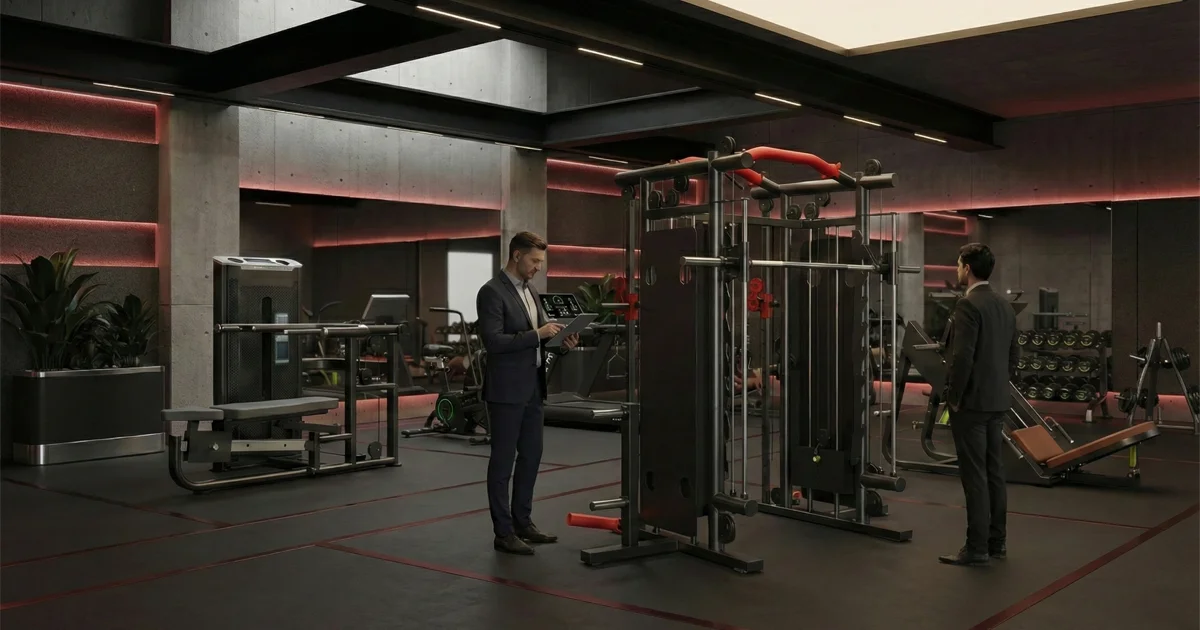
Nothing kills a member’s loyalty faster than an “Out of Order” sign taped to their favorite treadmill. You paid for the space, the staff and the marketing. Then the equipment quits in month eight.
If you run a gym, hotel, studio or corporate wellness room, you’ve probably felt this. Rising costs, tighter margins and members who expect boutique-level gear everywhere.
Commercial gym products are machines engineered for continuous, multi-user use, typically 8 to 18+ hours a day. They have heavier frames, higher-rated motors, sealed bearings and commercial warranties.
Residential gear simply isn’t built for that load, and using it in a facility usually voids the warranty.
What Makes Commercial Gym Products Different From Home Equipment?
It comes down to duty cycle.
A home treadmill might see 30 minutes a day from one person. A club treadmill sees dozens of users, different body weights and sprint intervals from open to close.
In my experience, the differences show up in four places:
- Frame and welds: Thicker steel gauge and full welds instead of bolted joints.
- Drive systems: Continuous-duty AC motors on treadmills, heavier flywheels on bikes.
- Upholstery and grips: Sweat-resistant, tear-resistant materials that clean easily.
- Warranty terms: Coverage written specifically for facility use.
The mistake I see most often is a new studio owner buying “heavy-duty residential” to save money. It looks the same on the showroom floor. Six months later, the service calls start.
Which Commercial Gym Products Should You Buy First?
Start with what your members will use every single day. Flashy specialty machines can wait.
Cardio Essentials
Treadmills are almost always the highest-traffic pieces. Pair them with ellipticals, upright and recumbent bikes, and at least one rower or stair climber.
Strength Foundations
For most facilities, here is what actually works:
- Selectorized machines for beginners and quick circuits.
- Plate-loaded stations like leg presses and hack squats for serious lifters.
- Racks, benches and dumbbells for free-weight training.
- Functional trainers for cable work and small-group sessions.
Recovery and Extras
Stretching cages, saunas and cold plunges are now expected in many premium clubs. Add them once your core floor is covered.
How Do You Choose the Right Commercial Equipment Brand?
Brand matters less than fit, but proven names reduce risk. Facilities commonly rely on manufacturers like True Fitness, Hoist, Life Fitness, Nautilus and Keiser.
Ask every supplier these questions before signing:
- Is this rated for commercial use, and is the warranty valid in my facility type?
- Who handles service and parts, and how fast?
- Is delivery and installation included, or extra?
- Are financing or lease options available to protect cash flow?
Buying through an authorized dealer matters here. It protects your warranty and gives you a real person to call when something breaks.
What Are the Costliest Mistakes Facility Owners Make?
I’ve watched smart operators lose thousands on avoidable errors. The big ones:
- Ignoring floor plans. Machines need clearance zones, power access and sightlines for staff.
- Buying everything from one category. Ten treadmills and two benches create bottlenecks.
- Skipping preventive maintenance. A quarterly service visit costs far less than a replaced motor.
- Forgetting your actual members. A hotel guest and a powerlifter need very different gear.
Key takeaway: Plan your layout around traffic and user goals first. Then pick equipment to match.
Final Verdict
Commercial gym products cost more upfront because they’re built to survive constant use. That durability is what protects your member experience and your budget over the long run.
To recap:
- Buy commercial-rated gear for any shared or multi-user space.
- Prioritize high-traffic cardio and core strength before specialty pieces.
- Work with an authorized dealer for warranty, service and installation support.
Ready to outfit your facility the right way? Browse the full range of commercial gym products at The Fitness Outlet. Their team has been helping facilities plan, finance and install equipment for over 30 years, so you’re not guessing alone.
