

Introduction to Rummy for Beginners
Rummy can appear complicated when a beginner first encounters its terminology. Words such as sequence, set, pure sequence, and joker may sound unfamiliar, but the underlying concepts become easier with examples.
The main idea in many rummy games is to organise cards into valid combinations. Players draw and discard cards while trying to complete their hands according to the rules.
This guide introduces the fundamentals in simple language and explains how to start learning the game.
For more information about rummy topics, visit All Rummy.
Step One: Understand the Objective
In standard Indian 13-card rummy, every player receives 13 cards.
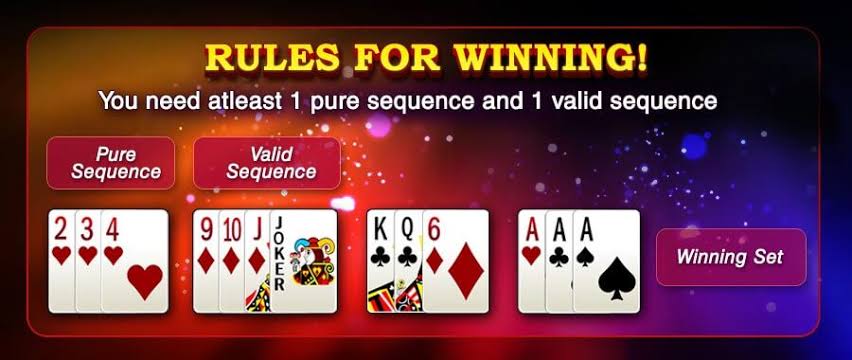
The objective is to arrange all the cards into valid combinations and make a correct declaration. A valid hand generally requires at least two sequences, including one pure sequence.
Other rummy formats may have different objectives, so this description applies specifically to the common Indian 13-card version.
Understanding the objective makes it easier to evaluate each card and decide which combinations to form.
Step Two: Learn What a Sequence Is
A sequence is a group of consecutive cards belonging to the same suit.
For example, the 2, 3, and 4 of hearts form a sequence. The 9, 10, and jack of spades form another.
The cards must satisfy the rules of the particular game. Simply holding consecutive numbers from different suits does not create a standard same-suit sequence.
Practise Recognising Sequences
Take a few cards from a standard deck and arrange them by suit.
Look for three consecutive values. Then identify which additional cards could extend the sequence.
For example, if you have the 6 and 7 of diamonds, the 5 or 8 of diamonds could extend the group.
This exercise helps beginners recognise useful card relationships.
Step Three: Understand Pure Sequences
A pure sequence contains consecutive cards of the same suit without a joker replacing a missing card.
For example, the 5, 6, and 7 of clubs form a pure sequence.
In standard Indian 13-card rummy, at least one pure sequence is required for a valid declaration.
This rule is important enough that beginners should learn it before concentrating on more complicated combinations.
Step Four: Learn Impure Sequences
An impure sequence uses an eligible joker to replace a missing card.
For example, the 8 of hearts, a joker, and the 10 of hearts may form an impure sequence if the joker represents the 9 of hearts.
The combination can be useful, but it does not replace the mandatory pure sequence in standard Indian 13-card rummy.
Step Five: Understand Sets
A set consists of cards with the same rank in different suits.
For example, the 3 of hearts, 3 of clubs, and 3 of diamonds may form a valid set.
A set does not require consecutive numbers. Its defining feature is that the cards share the same rank.
Jokers may be allowed in sets under the rules of the selected variation.
Step Six: Learn the Draw-and-Discard Routine
Many rummy games use a simple repeating process.
First, draw a card from a permitted pile. Next, review the hand to determine whether the card improves an existing combination. Finally, discard a card according to the rules.
This process repeats until the game ends.
Before discarding, examine the entire hand. A card that seems unnecessary in isolation may connect with another card to form a sequence.
Step Seven: Understand Jokers
Jokers are special cards that can substitute for missing cards in eligible combinations.
Some formats use printed jokers, while others also select a wild joker for a round.
Jokers can help complete impure sequences and sets. However, they cannot ordinarily substitute for a missing card in the required pure sequence in standard Indian 13-card rummy.
Always read the rules to understand which uses are permitted.
Step Eight: Learn Basic Scoring
Scoring differs between rummy variations.
In many Indian rummy formats, number cards are counted at their face values, while jacks, queens, kings, and aces commonly carry ten points each. Jokers generally count as zero.
The way these values affect the final result depends on the particular scoring system.
Read the rules for unmatched cards, penalties, and winning conditions before beginning.
Common Beginner Mistakes
New players sometimes confuse sequences with sets. Others forget the pure-sequence requirement or assume that every rummy variation uses the same number of cards.
Another frequent mistake is declaring a hand without reviewing every combination.
To avoid these problems, practise identifying the combinations and check the rules before making a declaration.
Exploring Other Rummy Variations
After learning the basics, readers may want to explore gin rummy, Indian 13-card rummy, or terms such as Rummy 51.
Each variation should be studied separately because hand size, scoring, and declaration conditions may differ.
For additional rummy-related reading, visit https://allrummyss.com/.
Tips for Learning at Your Own Pace
Start with card combinations rather than complicated strategies. Learn one rule at a time, practise with sample hands, and review incorrect combinations until they become familiar.
Free or offline practice can help you concentrate on the game without financial pressure.
Keep the activity recreational and follow all applicable rules and age restrictions.
Conclusion
Rummy becomes easier to understand when beginners learn sequences, sets, jokers, and the draw-and-discard process in order.
The most important lesson in standard Indian 13-card rummy is that a valid declaration generally requires two sequences, including at least one pure sequence.
Once the fundamentals are clear, exploring other rummy variations becomes more straightforward. Find further information at https://allrummyss.com/.
