

My neighbour’s father is 68. Retired bank manager. Manages his own medicines, his own appointments, everything himself.
Pays ₹45,000 a year for health insurance. Never missed a premium.
Last year, he spent ₹60,000 on doctor visits, tests, and medicines. Diabetes and a mild heart condition, both controlled, both need watching.
His insurance paid nothing. Not a single rupee.
No rejection. No technicality. Just no hospital bed involved.
Difference Between OPD And IPD
That is the gap nobody mentions at the time of buying.
Everything he spent, consultations, blood tests, pharmacy bills, that is OPD. You visit. You pay. You go home the same day.
What the policy covers is IPD. You get admitted. You stay at least 24 hours. You leave with a discharge summary.
Two very different things. For anyone buying health insurance for senior citizens above 65 years, knowing the difference between OPD and IPD changes everything about which plan to pick.
IPD: The One Insurance Always Covers
IPD is the Inpatient Department. Admission. Hospital bed. Minimum 24 hours inside.
Surgery. Heart attack. Fracture needing an operation. Kidney failure. Stroke. Serious infection needing IV drip.
You go in. You stay. You get discharged with a file full of papers. That file is what the insurer processes.
Room rent, surgeon fees, anaesthesia, ICU charges, medicines given inside the hospital, all IPD. Most health insurance policies are built entirely around this.
OPD: The One Insurance Mostly Ignores
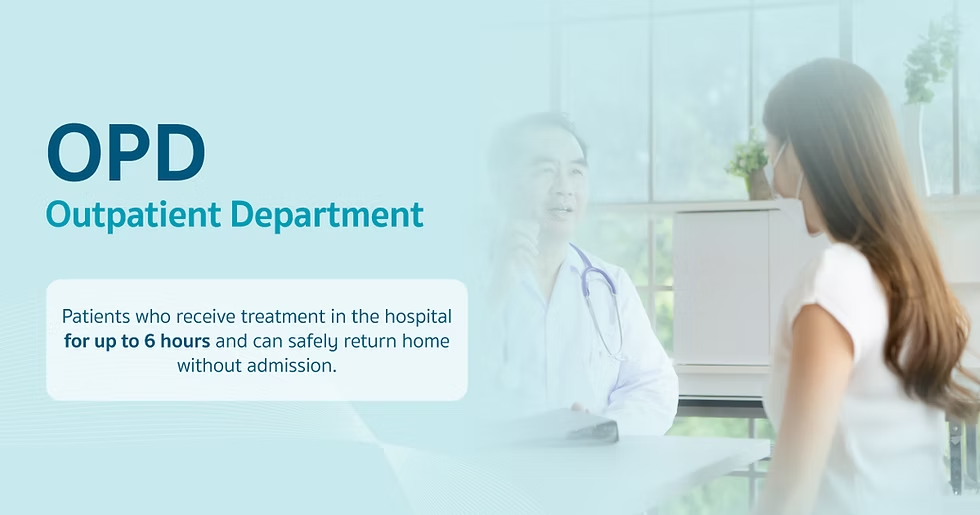
OPD is the Outpatient Department. You visit. You leave the same day.
Morning doctor visit. Blood test at the lab. Physiotherapy for a bad knee. Eye check. Dental cleaning. Monthly prescription picked up from the medical store.
No admission. No discharge summary. No file.
For a healthy 32-year-old, OPD is a minor expense. Maybe ₹5,000 to ₹8,000 a year.
For someone above 65 managing two or three chronic conditions, OPD is where the real money goes. Every single month.
What the Numbers Actually Look Like
Take a 66-year-old with controlled diabetes and blood pressure. Fairly typical profile.
| What They Spend On | Per Month | Per Year |
| Specialist consultations | ₹1,500 | ₹18,000 |
| Monthly medicines | ₹2,500 | ₹30,000 |
| Blood tests and HbA1c | ₹800 | ₹9,600 |
| Physiotherapy sessions | ₹1,200 | ₹14,400 |
| Total | ₹6,000 | ₹72,000 |
Now, the same person. Good year. No hospitalisation. IPD spend, zero.
The insurance covers the zero. The ₹72,000 comes entirely from savings or pensions.
This is not an edge case. This is the standard reality for most people buying health insurance for senior citizens above 65 years. The spending is overwhelmingly outpatient. The cover is overwhelmingly inpatient.
Why Insurers Are Reluctant About OPD
It is not that insurers do not understand the problem. They do.
The issue is that OPD claims are small, frequent, and difficult to validate. A ₹45,000 hospitalisation comes with a discharge summary, a surgeon’s certificate, and a detailed bill. The insurer can verify everything.
A ₹500 clinic visit comes with a handwritten prescription and a receipt. Multiply that across lakhs of policyholders every month, and the verification problem becomes enormous, and so does the fraud risk.
So most plans leave OPD out. A few offer it as an add-on. Newer plans are building it in, but with annual caps that are often too low to matter.
OPD vs IPD: The Short Version
| OPD | IPD | |
| Hospital stay needed? | No | Yes, 24 hours minimum |
| Common examples | Doctor visits, tests, medicines | Surgery, ICU, major treatment |
| Covered in most plans? | No | Yes |
| How often does a senior need it? | Every month | Once in a few years |
| Cost per incident | Low | High |
Questions to Ask Before Buying
When shopping for health insurance for senior citizens above 65 years, OPD is not a bonus feature. It is a basic need. Ask these before signing anything.
- Is OPD covered or excluded? Many plans do not mention it at all. Silence usually means exclusion.
- What is the annual OPD limit? A ₹5,000 annual cap for someone spending ₹72,000 on outpatient care is practically useless. Look for plans where the OPD limit is at least ₹20,000 to ₹30,000.
- Do medicines count? Some plans cover consultation fees but not prescribed medicines. For seniors, medicines are often the single biggest OPD cost.
- Are diagnostic tests included? Monthly blood work, HbA1c, lipid profiles, ECGs, all OPD. Check if the plan covers them.
- Any network restrictions? OPD cover that only works at specific clinics means nothing if your regular doctor is not on that list.
The Co-payment Trap
Most health insurance for senior citizens above 65 years policies include a co-payment, you pay 10% to 30% of every claim yourself.
On OPD claims, this can be even steeper. A plan with 30% co-payment on OPD means on a ₹72,000 annual spend, you still pay ₹21,600 out of pocket.
Better than paying the full amount, but worth calculating before you assume the plan covers everything.
Before You Buy: Quick Checklist
- OPD covered or excluded?
- Annual OPD limit, and is it enough?
- Medicines and diagnostics included?
- Co-payment percentage for both OPD and IPD
- Network restrictions for outpatient claims
- Waiting period for pre-existing conditions
Last Word
My neighbour’s father renewed his policy again this year. Same plan. He did not know OPD was an option worth asking about. Nobody told him.
The difference between OPD and IPD is not a technicality buried in the policy document. For anyone above 65, it is the difference between insurance that actually helps through the year and insurance that only activates during a crisis.
The crisis covers matters. But so do the ordinary Tuesdays, the doctor visit, the blood test, the pharmacy bill.
When buying health insurance for senior citizens above 65 years, check both. Not just what happens if things go very wrong. Check what happens in a regular month, too.
