

Introduction
Maintaining stable temperatures is an important requirement in many commercial and industrial environments. Refrigeration systems, cold storage facilities, insulated transport vehicles and building envelopes all depend on materials that limit unwanted heat transfer. When insulation is selected carefully, equipment can maintain the required conditions more efficiently, while the surrounding structure remains suitable for its intended use.
Rigid foam insulation is widely considered for these applications because it combines a relatively low weight with useful thermal and mechanical properties. However, the right material depends on the operating temperature, available installation space, exposure to moisture and the structural requirements of the finished assembly.
Understanding these factors helps businesses select insulation that supports long-term performance instead of making decisions based on thickness or price alone.
Why Thermal Insulation Matters in Industrial Operations
Heat naturally moves from warmer areas towards cooler ones. In a refrigerated warehouse, heat entering through walls and ceilings increases the cooling load. In an insulated vehicle body, heat transfer can make it more difficult to maintain a consistent internal temperature during transportation.
Similar challenges occur in commercial buildings, refrigeration equipment and industrial enclosures. Without suitable insulation, heating and cooling systems may need to work harder to maintain the desired conditions.
Insulation reduces heat transfer through the building element or equipment assembly. Its effectiveness depends on the thermal conductivity of the material, its thickness and the way the complete construction is installed.
Gaps, poorly fitted joints and thermal bridges can weaken the performance of an otherwise suitable material. For this reason, insulation design should consider the entire assembly, including joints, supports and penetrations.
Understanding Polyurethane Foam Insulation
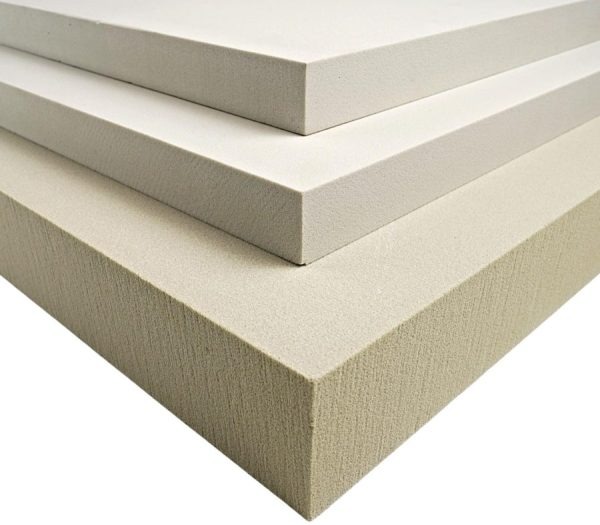
Polyurethane foam is a manufactured material used in a wide range of thermal insulation applications. Rigid polyurethane formulations can provide useful insulation performance while maintaining a relatively low weight.
The material’s cellular structure helps limit heat transfer, making it relevant to refrigeration, cold storage, insulated transport and building insulation projects.
Polyurethane foam insulation is particularly useful where designers need to balance thermal efficiency with available space. A material with low thermal conductivity can provide a desired level of insulation without requiring an unnecessarily thick construction, subject to the project’s technical requirements.
Acoustafoam supplies rigid foam products in sheet form and as CNC-cut components for industrial applications. Its range includes polyurethane and polyisocyanurate insulation products, as well as other rigid foam options suited to different requirements.
The appropriate grade should be selected using the manufacturer’s technical data rather than assuming that all polyurethane products have identical thermal or mechanical properties.
Choosing Insulation for Refrigeration and Cold Storage
Refrigeration facilities must limit heat entering the cooled space. This includes cold rooms, temperature-controlled warehouses, food storage areas and insulated transport bodies.
Rigid insulation foam can be incorporated into composite panels used for walls, ceilings and other parts of an insulated enclosure. It can also be used in suitable equipment assemblies where space and thermal performance are important.
The design must account for the required internal temperature, the temperature difference across the panel and the expected operating conditions. The insulation thickness should be determined through the project’s thermal design rather than selected in isolation.
Joint detailing is equally important. If warm air or moisture reaches a cold surface within the assembly, condensation may occur under certain conditions. Appropriate vapour-control measures, sealed joints and careful detailing can help manage this risk.
For transport applications, the insulation system must also suit the body construction, loading arrangements and service conditions. Repeated door opening, changes in ambient temperature and damage to panel edges can affect overall performance.
A complete specification should therefore address the foam, the surrounding panels and the installation details together.
Understanding Rigid Polyurethane Foam
Rigid polyurethane foam is designed to maintain a more stable shape than flexible cushioning foam. Depending on its formulation and density, it may provide a combination of thermal insulation, dimensional stability and mechanical support.
This makes it useful in applications where the material must fit a defined space or form part of a larger manufactured component.
Rigid polyurethane foam can be used in composite panels, insulation assemblies and various industrial products. The material’s suitability depends on the load it must withstand, the temperatures it will encounter and the method used to attach it to surrounding materials.
Acoustafoam’s rigid foam range covers insulation and structural applications. The company also describes its ability to supply sheet materials and CNC-cut parts, allowing components to be produced to specified shapes and dimensions.
It is important to distinguish between insulation-grade and structural-grade foams. A product chosen primarily for thermal performance should not automatically be assumed to provide the required load-bearing capacity.
Where a foam forms part of a structural assembly, the relevant mechanical properties and design requirements must be verified.
Comparing Thermal Conductivity and Insulation Thickness
Thermal conductivity describes how readily heat passes through a material. Lower conductivity generally indicates better insulation performance for a given thickness under comparable conditions.
This property helps engineers compare materials, but it is not the only factor affecting the performance of a completed installation. Thickness, joints, fixings and surrounding materials also influence heat transfer.
A designer may be able to reduce the thickness of an insulation layer by choosing a material with lower thermal conductivity. However, the final design must still meet the relevant thermal requirements, fire-safety provisions and structural constraints.
Acoustafoam publishes thermal information for its rigid insulation products, including polyurethane and polyisocyanurate options. Purchasers should consult the current technical data for the exact grade being considered because values vary between products and test conditions.
When evaluating alternatives, it is useful to compare the required insulation performance, total installed thickness, material cost and expected operating conditions.
Moisture Management and Long-Term Durability
Moisture can affect the performance and durability of an insulation system. Condensation may develop when warm, humid air meets a sufficiently cold surface, while water entering poorly protected joints can affect surrounding construction materials.
The solution is not simply to choose a foam described as moisture resistant. The complete installation must be designed to manage water vapour, condensation and potential water ingress.
This may involve appropriate facings, sealed joints, vapour-control layers and protection around penetrations. The correct approach depends on whether the insulation is used in a cold room, a building envelope, a transport body or another application.
Designers should also consider how the material’s cut edges will be protected and whether the assembly will be exposed to cleaning processes or repeated temperature changes.
Regular inspection can help identify damaged panels, deteriorating seals and other problems before they affect the insulation system more extensively.
Fire Performance and Building Requirements
Fire performance is a separate consideration from thermal efficiency. A material with excellent insulation properties is not automatically suitable for every building or equipment installation.
The relevant requirements depend on the application, the complete assembly and applicable regulations. Some projects may require particular reaction-to-fire classifications or evidence from specific test methods.
Acoustafoam’s rigid foam range includes phenolic products alongside polyurethane and polyisocyanurate options. Phenolic foam is described on the company’s website as having low thermal conductivity and particular fire-performance characteristics.
These materials should not be treated as interchangeable. Designers need to review the documentation for the precise product and the intended construction.
Where a formal fire classification is required, the responsible project team should verify the supporting evidence and confirm that it applies to the proposed installation. Facings, adhesives, joints and supporting materials may also influence the performance of the completed system.
The Value of Custom-Cut Insulation Components
Standard sheets are convenient for straightforward installations, but industrial equipment often contains unusual dimensions, corners and recessed sections.
Custom-cut foam components can help accommodate these features. They may be used where insulation must fit around internal supports, follow a defined profile or fit within a repeatable manufacturing assembly.
Acoustafoam offers CNC-cut rigid foam components to customer specifications. This capability can support manufacturers who require consistent parts for repeated production.
Accurate measurements and drawings help ensure that the component matches the intended space. Designers should identify cut-outs, clearances, fixing arrangements and any areas that require additional protection.
The selected cutting and fitting method should also preserve the required performance of the finished assembly. A well-fitting component is useful, but it still needs to be installed in a way that maintains the overall insulation design.
Selecting a Supplier for Industrial Insulation
Choosing an insulation supplier involves more than comparing individual material prices. Businesses should consider the range of available products, technical documentation, conversion capabilities and ability to supply the required component format.
A clear enquiry can help the supplier identify suitable options. It should describe the intended application, operating temperatures, dimensions, desired thermal performance and any fire or structural requirements.
For refrigeration and transport applications, information about the complete panel construction and moisture-control arrangements may also be relevant.
Acoustafoam manufactures foam, rubber and plastic components for several industries and offers processing services using equipment such as CNC machines and water jets. This can be helpful where the project requires custom shapes rather than standard sheets.
Before finalising an order, purchasers should confirm the selected grade, current product data, dimensions and any required supporting documentation.
Conclusion
Effective insulation planning begins with understanding how heat moves through a building, enclosure or manufactured product. Polyurethane foam insulation can be a useful option where low thermal conductivity, reduced weight and adaptable component formats are important.
Rigid polyurethane foam is used in a range of insulation and industrial applications, but the correct grade depends on the operating conditions, required mechanical performance and construction details. Moisture control, fire requirements and installation quality must also be considered.
For businesses developing cold storage panels, insulated transport bodies or other industrial assemblies, reviewing Acoustafoam’s rigid foam products can help identify materials and component formats suited to the project. A clear technical specification provides the best foundation for selecting an effective insulation solution.
