

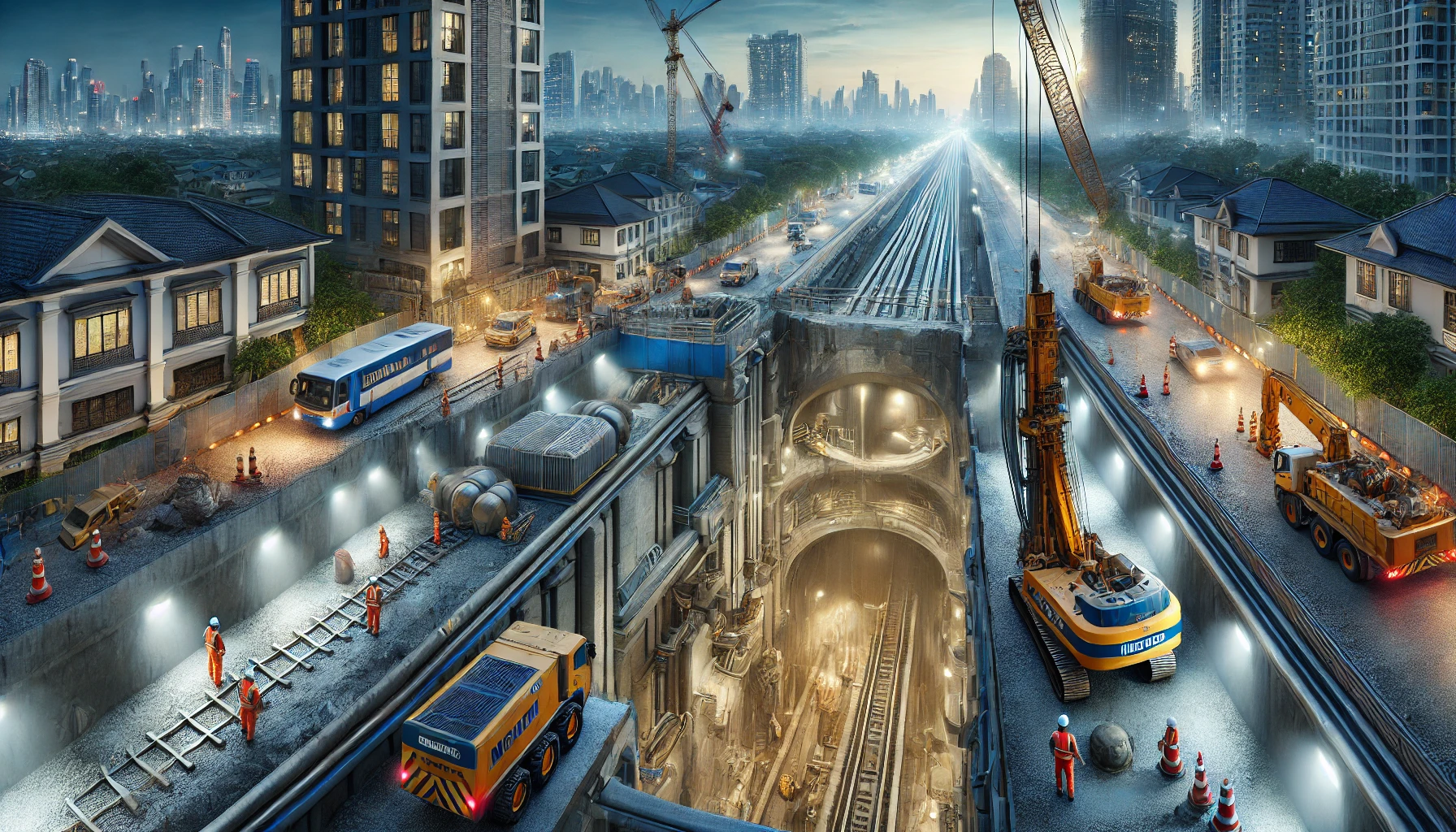
The Metro Manila Subway, which will pass beneath Corinthian Village, marks a significant step in the Philippines’ transportation landscape as the nation’s first-ever underground mass transit system. This project is set to transform urban mobility, addressing the traffic congestion that has long plagued Metro Manila. The section passing under Corinthian Village, a well-known residential area in Quezon City, is a key engineering achievement that will integrate state-of-the-art infrastructure into a densely populated urban environment.
Overview of the Metro Manila Subway Project
The Metro Manila Subway is a 36-kilometer rail line designed to span the northern and southern reaches of Metro Manila. With 17 stations planned, ranging from Valenzuela City to Ninoy Aquino International Airport (NAIA) Terminal 3, this subway system promises to offer a much faster, more efficient mode of transportation. Partially funded by the Japan International Cooperation Agency (JICA), it is set to become the backbone of the capital’s public transit network.
A distinctive feature of the subway is its underground route, which will help bypass the city’s notoriously congested roads. This is especially important as the subway passes beneath Corinthian Village, a residential enclave known for its upscale properties and strategic location near Ortigas Center.
Why the Subway Will Pass Under Corinthian Village
Routing the Metro Manila Subway beneath Corinthian Village was driven by the need for an optimal route that would minimize disruptions to both infrastructure and residents. The area is strategically positioned near key commercial districts such as Ortigas Center and is close to major roadways like EDSA, making it a crucial segment of the subway’s alignment.
By constructing the subway underground, the project avoids the need for significant land acquisitions or the demolition of existing structures, allowing it to seamlessly connect stations while preserving the integrity of the residential area above.
Challenges and Engineering Marvels
Building the subway beneath Corinthian Village presents unique engineering and environmental challenges. Below are some of the main considerations:
- Geotechnical Studies: Thorough analyses of soil conditions and the water table have been conducted to ensure the structural integrity and safety of the underground construction.
- Tunnel Boring Machines (TBMs): Cutting-edge TBMs are being used to excavate and fortify the tunnels. These machines minimize surface disruptions, making them ideal for working under sensitive areas like Corinthian Village.
- Noise and Vibration Control: Measures are in place to mitigate noise and vibration impacts on the residents, both during construction and once the subway is operational.
- Safety Measures: Advanced technologies and stringent safety protocols are being followed to prevent potential issues like subsidence or flooding, ensuring that the project does not compromise the stability of the surface structures.
Impact on Corinthian Village and Surrounding Areas
While the Metro Manila Subway’s route under Corinthian Village presents some challenges, it will also bring considerable benefits to the area:
- Enhanced Accessibility: The subway will provide residents of Corinthian Village with quicker access to various parts of Metro Manila, reducing travel time to major business districts and leisure destinations.
- Increased Property Value: The improved connectivity resulting from the subway’s operation is expected to drive up property values in Corinthian Village and its surrounding neighborhoods.
- Temporary Disruptions: As with any large-scale construction project, there may be temporary inconveniences for residents, including noise, vibrations, and increased traffic around the construction zones.
Environmental and Social Considerations
The subway project places a strong emphasis on environmental sustainability and social responsibility. Efforts are being made to reduce the environmental impact and carbon footprint associated with the construction. Additionally, consultations with residents of Corinthian Village and nearby areas have been held to address concerns and ensure that the development proceeds with transparency and community support.
Frequently Asked Questions
What is the Metro Manila Subway, and why is it significant?
The Metro Manila Subway is the Philippines’ first-ever underground mass transit system. Spanning 36 kilometers, it aims to revolutionize urban transportation by providing a faster, more efficient alternative to current transport options, easing the traffic congestion in Metro Manila.
Why will the subway pass under Corinthian Village?
The subway will pass under Corinthian Village to minimize disruptions to the existing infrastructure and to maintain efficient connections between key areas like Ortigas Center. This underground route helps avoid land acquisition and demolition of existing structures, while preserving the integrity of the residential area.
What are the benefits of the Metro Manila Subway for Corinthian Village residents?
Residents will benefit from enhanced accessibility, with quicker travel times to important business, commercial, and leisure districts. The subway is also expected to increase property values in Corinthian Village due to improved connectivity.
How will the construction of the subway affect Corinthian Village and its residents?
During construction, there may be temporary disruptions such as noise, vibrations, and increased traffic around construction zones. However, efforts will be made to minimize these impacts to ensure minimal disruption to daily life.
What challenges are involved in building the subway under Corinthian Village?
The construction involves engineering challenges such as dealing with varying soil conditions, managing noise and vibration, and ensuring the structural safety of both the subway and properties above ground. Advanced technologies, including tunnel boring machines (TBMs), will be used to minimize surface disruption.
How will noise and vibrations from the subway construction be managed?
Special measures, including noise-reducing equipment and techniques, will be implemented during construction. These efforts are designed to minimize any disturbances to the residents of Corinthian Village and surrounding areas.
What safety measures are in place for the subway construction under Corinthian Village?
Stringent safety protocols will be followed to mitigate risks like subsidence and flooding. State-of-the-art technologies will be used to monitor the construction process and ensure the structural stability of the area.
How will the subway project contribute to Metro Manila’s overall transportation system?
The Metro Manila Subway will connect key areas from Valenzuela City to Ninoy Aquino International Airport (NAIA), easing traffic congestion and providing a faster, more efficient transportation option. It will serve as the backbone of Metro Manila’s public transport system.
How is the subway project being funded?
The Metro Manila Subway project is partially funded by the Japan International Cooperation Agency (JICA), alongside contributions from the Philippine government. This collaboration ensures that the project can move forward with sufficient resources.
How will the subway impact the environment and surrounding communities?
Environmental sustainability is a priority for the subway project. Measures are being taken to minimize the environmental impact, including reducing the carbon footprint of construction activities. Additionally, community consultations have been held to address residents’ concerns and ensure transparency throughout the development process.
Conclusion
The Metro Manila Subway’s passage under Corinthian Village is a landmark moment in the city’s infrastructure development. By offering a modern, underground transit solution, this project not only addresses Metro Manila’s chronic traffic congestion but also sets the stage for enhanced urban mobility. The thoughtful planning to bypass residential areas while minimizing disruption showcases a commitment to balancing growth with community needs. As the subway prepares to become the backbone of the capital’s public transport system, it promises to bring greater accessibility, increased property values, and a more sustainable future for Metro Manila.
